
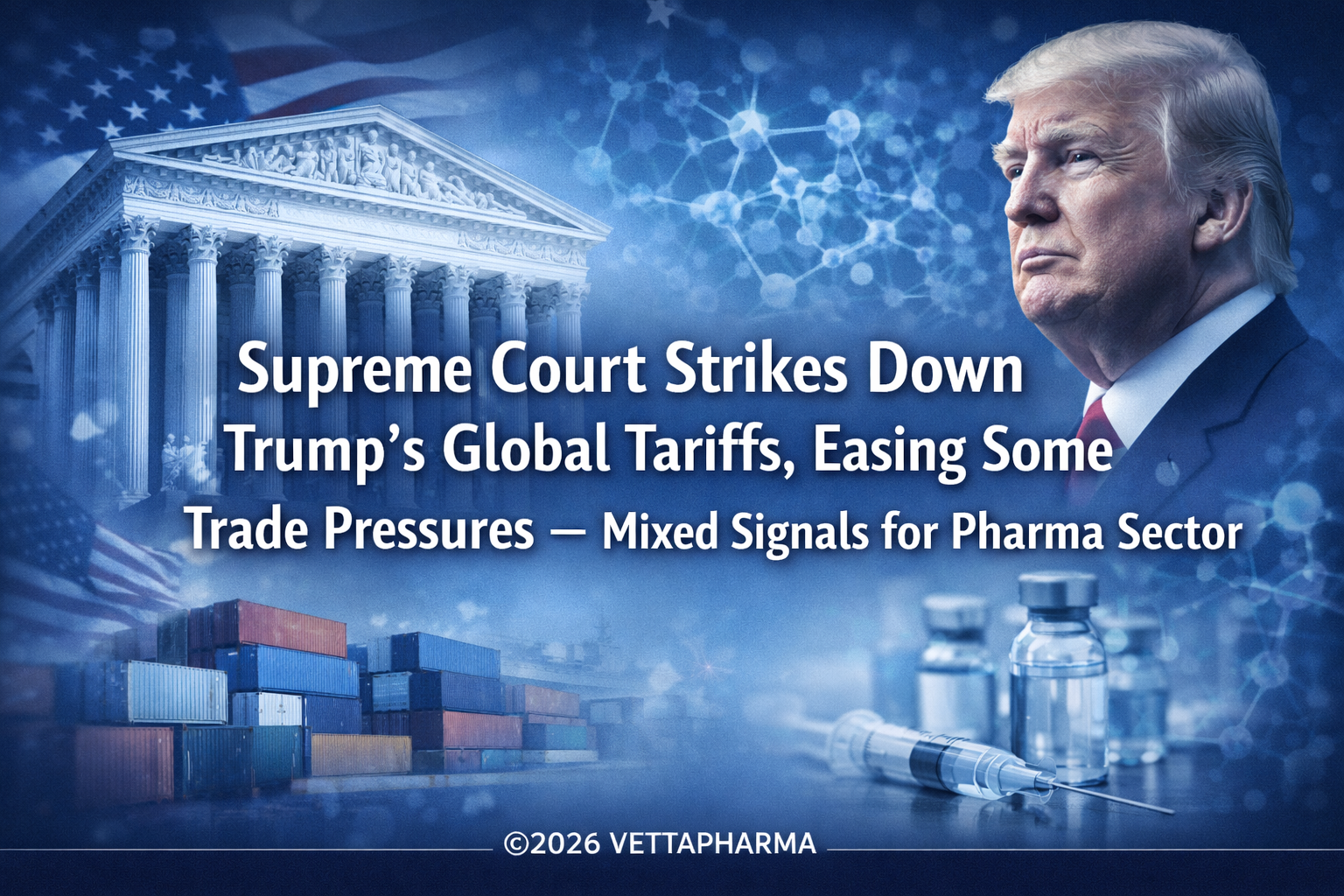
By VETTAPHARMA reporter: In a landmark 6-3 decision on February 20, 2026, the U.S. Supreme Court ruled that former President Donald J. Trump lacked the statutory authority under the International Emergency Economic Powers Act (IEEPA) to impose sweeping global tariffs, invalidating the broad import duties levied under emergency trade powers. The court held that tariff authority is vested in Congress, not the executive branch, and that the IEEPA does not authorize the president to unilaterally impose broad tariffs on imported goods.
Chief Justice John Roberts wrote the majority opinion that found the language of IEEPA insufficient to grant tariff-setting power to the president. Justices Sonia Sotomayor, Elena Kagan, Neil Gorsuch, Amy Coney Barrett, and Ketanji Brown Jackson joined the majority on key sections of the opinion. Dissenting were Justices Brett Kavanaugh, Clarence Thomas, and Samuel Alito, who argued that the tariffs were lawful or could be justified under alternative statutory authorities.
The ruling has immediate implications for U.S. trade policy and industry compliance. Analysts estimate that more than $175 billion in tariff revenues collected under the challenged tariffs could become subject to refunds or litigation now that the legal basis has been struck down. Business groups welcomed the decision as restoring predictability to trade policy, though industry leaders also cautioned that uncertainty remains for specific sectors.
Trade Policy Response
In response to the Supreme Court verdict, President Trump announced a temporary global tariff of 10 percentage points on imports under Section 122 of the Trade Act of 1974, effective for 150 days, as an interim measure. This new tariff is expected to apply broadly while remaining under different statutory authority than the invalidated IEEPA-based duties. Reports indicate that U.S. trading partners, including India, could see tariff rates on some goods reduced to 10 percent from previously negotiated rates after the court decision.
The tariff saga has rekindled debate over trade authority, with the Supreme Court’s ruling reaffirming Congress’s constitutional power to tax and call into question expansive executive interpretations of emergency powers.
Impact on the Pharmaceutical Industry
For the pharmaceutical sector, the Supreme Court decision and ensuing trade policy shifts have mixed implications:
Short-term relief on direct drug tariffs: The temporary 10 percent tariff order and the invalidation of the IEEPA tariffs mean that many broad import levies previously targeted at pharmaceutical products and raw materials will not be imposed under emergency tariff authority. Excluding pharmaceuticals from tariff increases helps maintain stable access to imported active pharmaceutical ingredients (APIs) and finished medicines — critical for supply chain continuity.
Ongoing uncertainty from alternative authorities: While the IEEPA route was struck down, the administration’s use of Section 301 (unfair trade) or Section 232 (national security) trade statutes remains available. These could still be invoked to target specific pharmaceutical components or manufacturing inputs, leaving some long-term tariff uncertainty for drug importers and exporters.
Legal and compliance costs: The potential refunds of billions in tariff revenue and ongoing litigation may increase administrative and legal costs for multinational pharmaceutical companies and their logistics partners, even if the tariffs themselves are not directly levied against drug products.
Global trading context: U.S. trading partners and industry bodies have expressed cautious optimism about the ruling, but concerns remain about the consistency of U.S. trade policy and its effect on global supply chains, including for high-value pharmaceuticals and biotech products.
Outlook
The U.S. Supreme Court decision represents a significant legal rebuke to expansive executive tariff authority and a partial easing of direct tariff pressure on the pharmaceutical industry. However, the administration’s swift adoption of alternative tariff mechanisms and ongoing trade negotiations suggest that policy uncertainty will persist in the near term for global pharma companies operating in the U.S. market.

