
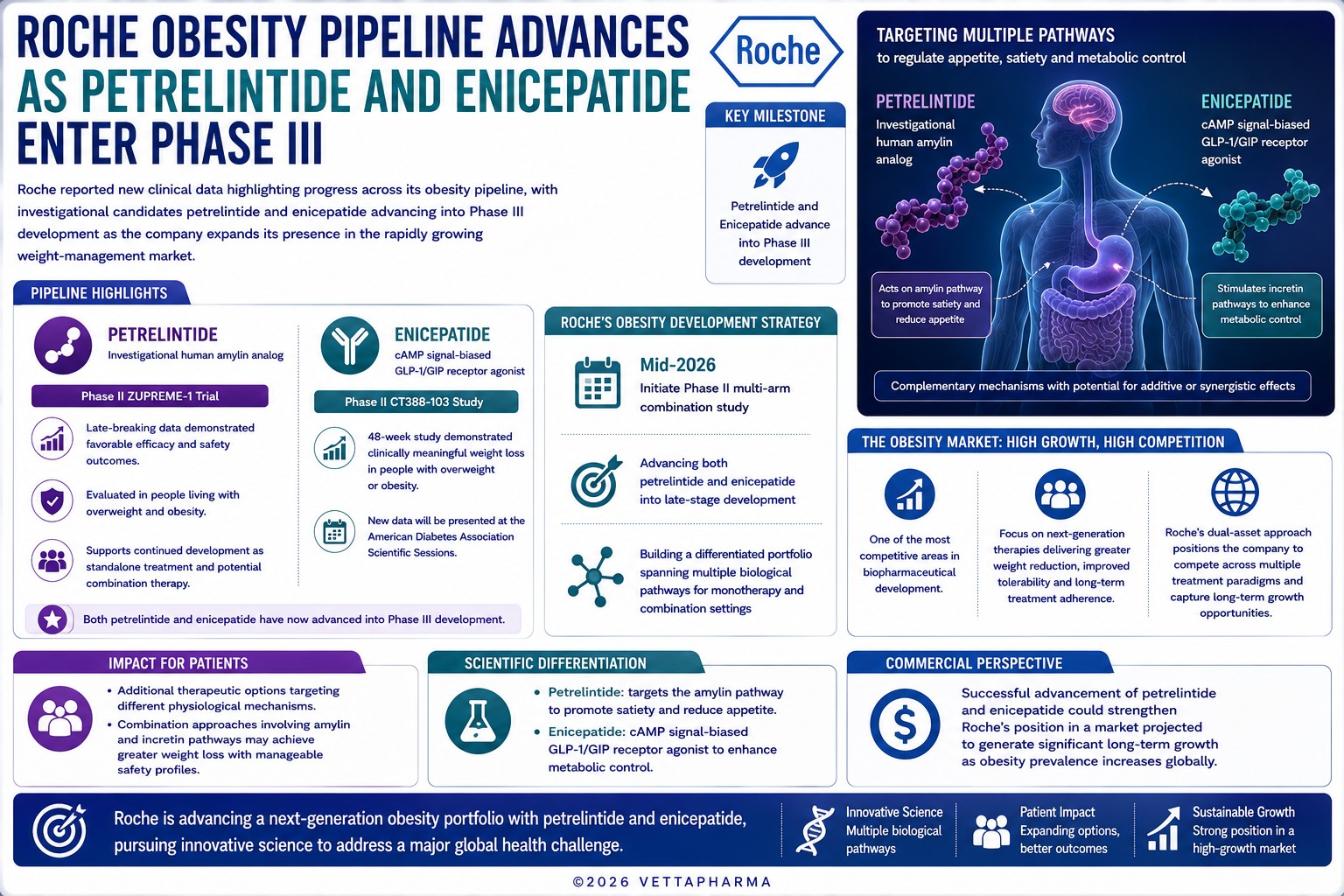
By VETTAPHARMA reporter – Derek Roche: Roche reported new clinical data highlighting progress across its obesity pipeline, with investigational candidates petrelintide and enicepatide advancing into Phase III development as the company expands its presence in the rapidly growing weight-management market. The update includes late-breaking findings from the Phase II ZUPREME-1 trial evaluating petrelintide, an investigational human amylin analog for weight management in people living with overweight and obesity. Roche said the data demonstrated favorable efficacy and safety outcomes, supporting continued development of the asset as both a standalone treatment and a potential combination therapy.
Roche also highlighted new data from the Phase II CT388-103 study evaluating enicepatide, a cAMP signal-biased GLP-1/GIP receptor agonist. The 48-week study demonstrated clinically meaningful weight loss in people with overweight or obesity and will be presented during the American Diabetes Association Scientific Sessions.
Beyond individual assets, Roche announced plans to initiate a Phase II multi-arm combination study in mid-2026 while simultaneously advancing both enicepatide and petrelintide into late-stage development. The strategy reflects the company’s efforts to build a differentiated obesity portfolio spanning multiple biological pathways associated with appetite regulation, satiety, and metabolic control.
The obesity market has become one of the most competitive areas in biopharmaceutical development as companies pursue next-generation therapies capable of delivering greater weight reduction, improved tolerability, and long-term treatment adherence. Roche’s dual-asset approach positions the company to compete across both monotherapy and combination-treatment settings.
For patients living with obesity or overweight, development of additional therapeutic options may expand access to treatments targeting different physiological mechanisms. Combination approaches involving amylin and incretin pathways are increasingly viewed as a potential strategy for achieving greater weight loss while maintaining manageable safety profiles.
From a commercial perspective, successful advancement of petrelintide and enicepatide could strengthen Roche’s position in a market projected to generate significant long-term growth opportunities as obesity prevalence continues to increase globally.
Quick FAQs
1. What is petrelintide?
Petrelintide is an investigational human amylin analog being developed for weight management in people with overweight and obesity.
2. What is enicepatide?
Enicepatide is an investigational cAMP signal-biased GLP-1/GIP receptor agonist designed to support weight reduction and metabolic control.
3. What is the ZUPREME-1 study?
ZUPREME-1 is a Phase II clinical trial evaluating the efficacy and safety of petrelintide in people living with overweight and obesity.
4. What is obesity?
Obesity is a chronic metabolic disease characterized by excess body fat that increases the risk of cardiovascular disease, type 2 diabetes, and other serious health conditions.
5. What was the key update from Roche?
Roche announced new Phase II data for petrelintide and enicepatide and confirmed that both programs are advancing into Phase III development.
6. Why is this important for Roche?
The update strengthens Roche’s obesity portfolio and expands its position in one of the fastest-growing therapeutic markets in biopharma.

