
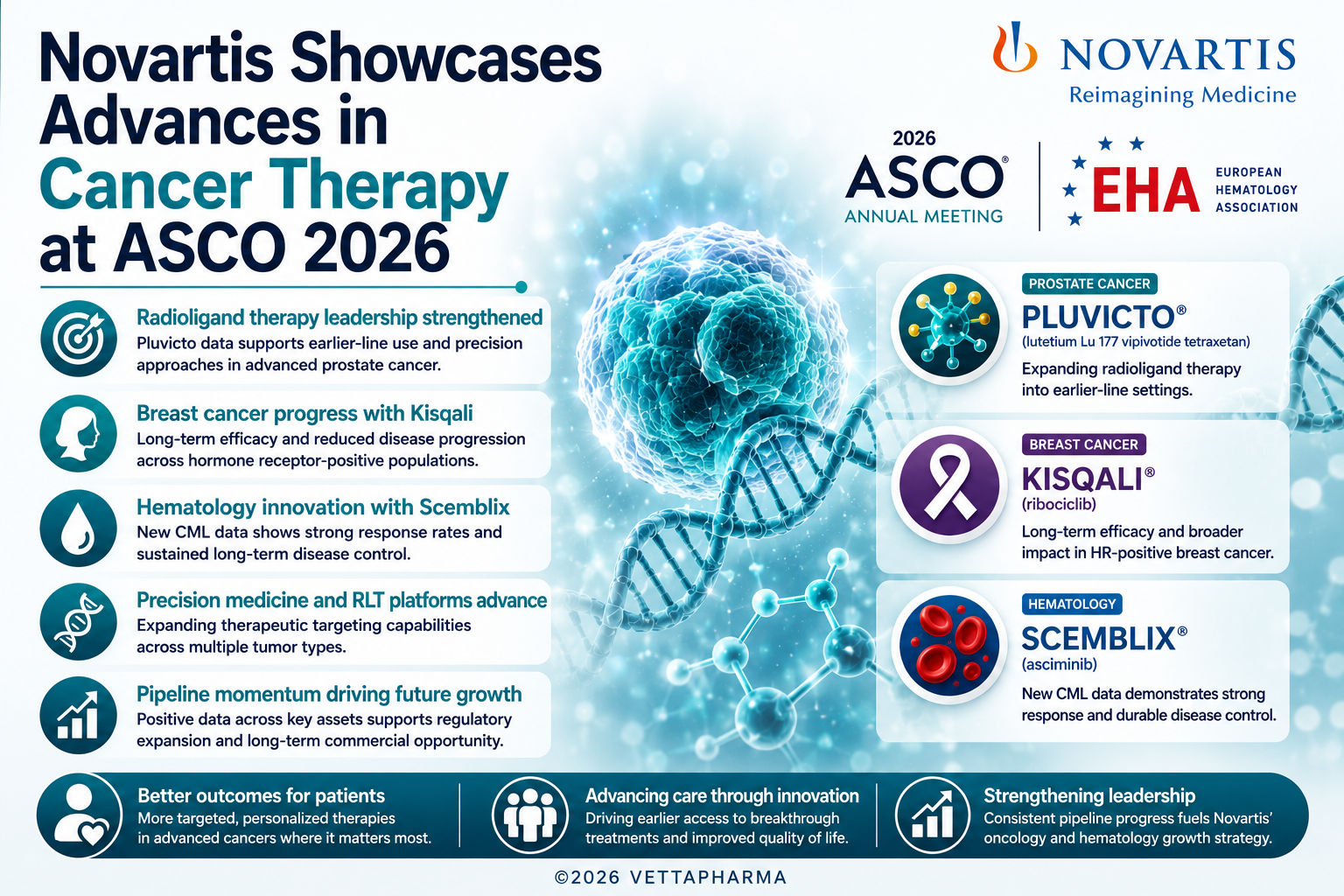
By VETTAPHARMA reporter – Derek Roche: Novartis presented new clinical data across radioligand therapy, breast cancer, prostate cancer, and hematology at the 2026 American Society of Clinical Oncology (ASCO) and European Hematology Association (EHA) meetings, reinforcing its oncology and hematology pipeline strategy.
In prostate cancer, Novartis highlighted radioligand therapy data involving Pluvicto, including studies focused on earlier-line treatment settings and precision oncology approaches designed to improve outcomes in patients with advanced prostate cancer. The presentations further support expansion of radioligand therapy use beyond currently approved indications.
In breast cancer, data included updates from programmes involving Kisqali, with analyses focused on long-term efficacy, disease progression reduction, and broader use across hormone receptor-positive breast cancer populations.
Within hematology, Novartis presented new findings for Scemblix, including data evaluating treatment response and long-term disease control in chronic myeloid leukemia (CML), reinforcing the company’s focus on differentiated targeted therapies in blood cancers.
Additional presentations highlighted ongoing innovation in radioligand therapy platforms and precision medicine approaches, including efforts to expand therapeutic targeting capabilities across multiple tumor types.
The data presented at ASCO and EHA aligns with Novartis’ strategy of strengthening leadership in radioligand therapy, solid tumors, and hematologic malignancies, while advancing earlier-line use and broader application of key commercial assets.
For patients, the latest findings may support improved access to more targeted and personalized treatment approaches, particularly in advanced cancers where long-term disease control and treatment sequencing remain major clinical priorities.
From a commercial perspective, continued positive data across Pluvicto, Kisqali, and Scemblix reinforces Novartis’ growth strategy in oncology and hematology, with ongoing clinical expansion potentially supporting future regulatory opportunities and additional market growth.

