
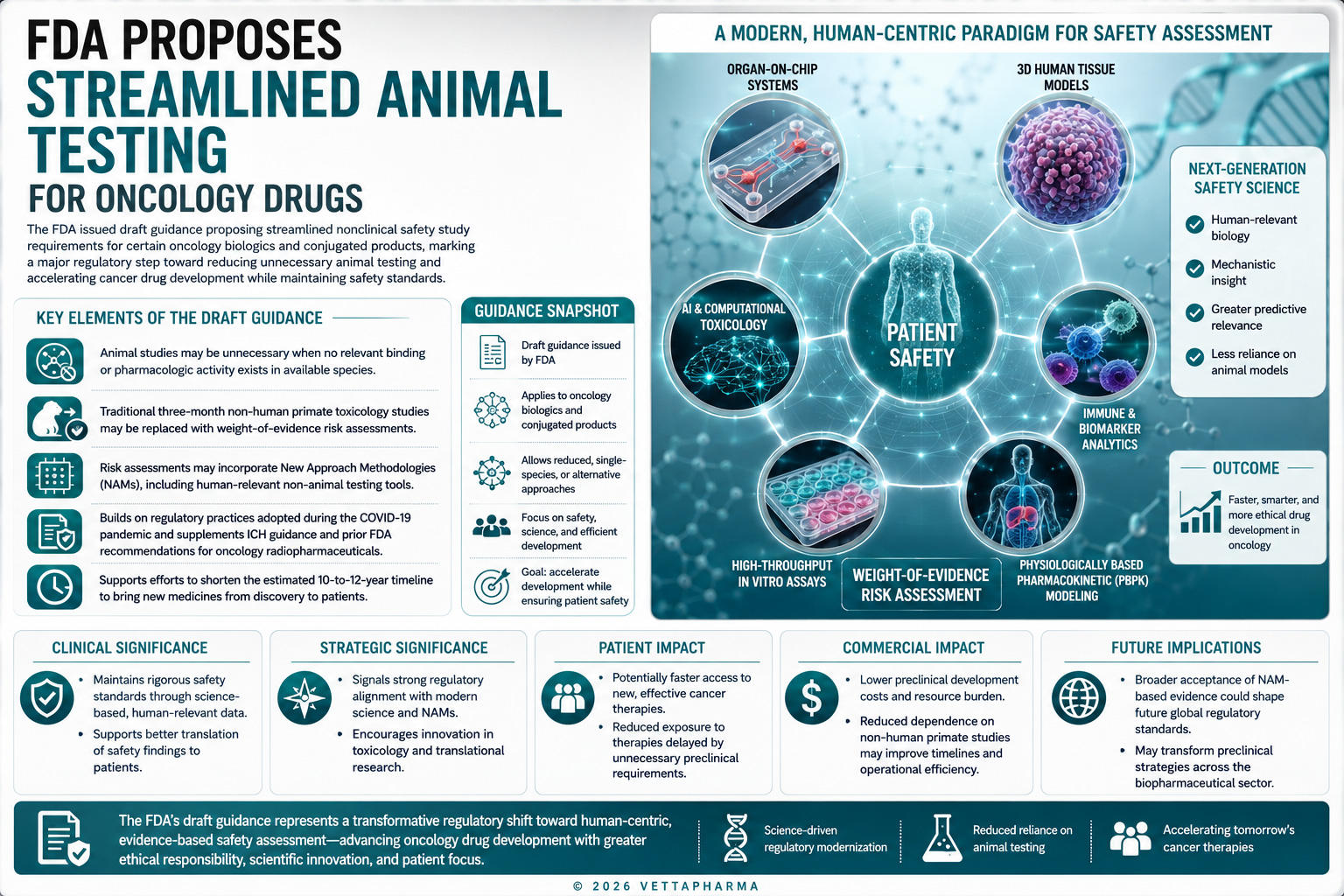
By VETTAPHARMA reporter – Derek Roche: The U.S. Food and Drug Administration issued draft guidance proposing streamlined nonclinical safety study requirements for certain oncology biologics and conjugated products, marking a significant regulatory step toward reducing unnecessary animal testing during cancer drug development.
The draft guidance, titled Oncology Pharmaceuticals: Streamlined Nonclinical Safety Studies for Biologics and Conjugated Products, outlines circumstances in which animal testing may be reduced, limited to a single relevant species, or replaced with alternative evidence-based approaches. The agency said the recommendations are intended to accelerate development timelines while maintaining safety standards for investigational oncology therapies.
According to the FDA, animal studies may be unnecessary when no relevant binding or pharmacologic activity exists in available species. In other situations, the agency recommends replacing traditional three-month non-human primate toxicology studies with weight-of-evidence risk assessments that may incorporate New Approach Methodologies (NAMs), including human-relevant non-animal testing tools.
The guidance builds on regulatory practices adopted during the COVID-19 pandemic that reduced reliance on non-human primates while supporting continued therapeutic development. It also supplements existing guidance from the International Council for Harmonisation and previous FDA recommendations involving oncology therapeutic radiopharmaceuticals.
FDA Oncology Center of Excellence Director Angelo de Claro stated that the draft guidance supports efforts to expedite regulatory pathways while reducing unnecessary animal testing during drug development. The agency noted that the broader initiative aligns with efforts to shorten the estimated 10-to-12-year timeline often required to bring new medicines from discovery to patients.
For oncology developers, the proposed framework could reduce preclinical development costs, decrease dependence on non-human primate studies, and support broader adoption of human-centric safety assessment technologies. Companies developing biologics, antibody-drug conjugates, radiopharmaceuticals, and other complex oncology modalities may be among the primary beneficiaries if the recommendations are finalized.
From a strategic perspective, the guidance reflects a broader regulatory shift toward integrating alternative testing methodologies into drug development programs. Expanding acceptance of NAM-based evidence could influence future oncology development strategies while reshaping preclinical research requirements across the biopharmaceutical sector.
Quick FAQs
1. What did the FDA announce?
The FDA issued draft guidance proposing reduced and streamlined animal testing requirements for certain oncology drug development programs.
2. What is the draft guidance about?
The guidance outlines when animal studies may be reduced, replaced, or limited during development of oncology biologics and conjugated products.
3. What is the study/trial?
This announcement is a regulatory draft guidance and does not involve a specific clinical study or trial.
4. What is the disease condition?
The guidance applies broadly to oncology drug development and is intended to support development of cancer therapies across multiple tumor types.
5. What are New Approach Methodologies (NAMs)?
NAMs are alternative non-animal testing approaches that may include human-relevant laboratory, computational, and predictive safety assessment tools.
6. Why is this guidance important?
The recommendations could reduce development timelines, lower preclinical costs, and decrease reliance on animal testing while maintaining regulatory safety standards.

