
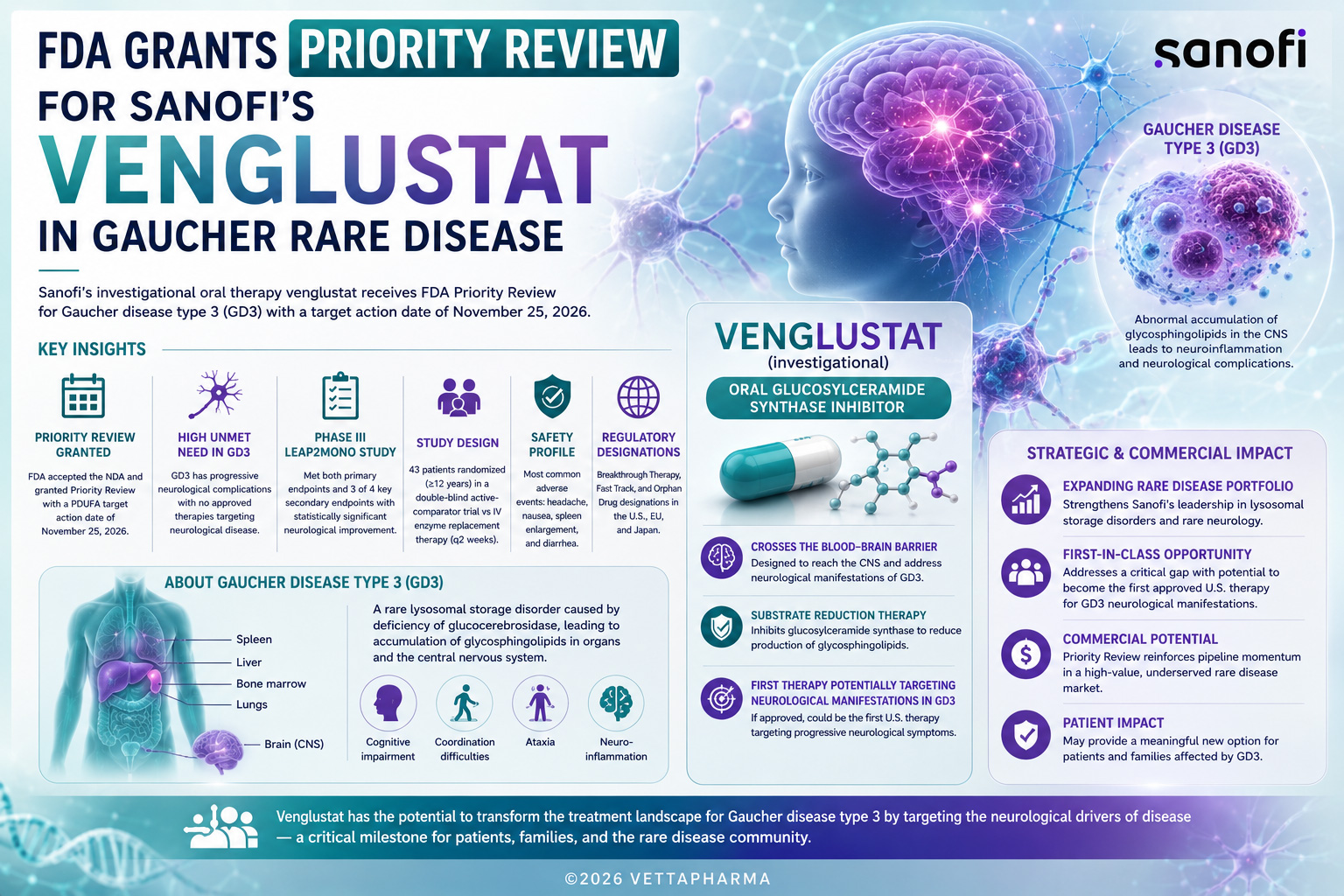
By VETTAPHARMA reporter – Derek Roche: Sanofi reported that the U.S. Food and Drug Administration granted priority review to the New Drug Application for venglustat, an investigational oral glucosylceramide synthase inhibitor being developed for Gaucher disease type 3 (GD3).
If approved, venglustat could become the first therapy available in the United States targeting progressive neurological manifestations associated with Gaucher disease type 3, a rare lysosomal storage disorder with significant unmet medical need.
Gaucher disease is characterized by abnormal accumulation of glycosphingolipids in organs including the spleen, liver, bone marrow, and lungs. In patients with GD3, these molecules also accumulate in the central nervous system, contributing to neuroinflammation and neurological complications including cognitive impairment, coordination difficulties, and ataxia.
The FDA assigned a target action date of November 25, 2026 for the regulatory decision.
Venglustat is designed as an oral substrate reduction therapy that inhibits glucosylceramide synthase, aiming to reduce production of glycosphingolipids and potentially slow neurological progression associated with GD3. The therapy crosses the blood-brain barrier, a key differentiating feature in addressing neurologic manifestations where approved targeted therapies currently remain unavailable.
The NDA is supported by data from the Phase III LEAP2MONO study evaluating venglustat in adult and pediatric GD3 patients aged 12 years and older with stabilized systemic disease manifestations following enzyme replacement therapy. Sanofi reported that venglustat met both primary endpoints and three of four key secondary endpoints, while demonstrating statistically significant neurological improvements compared with enzyme replacement therapy.
In the study, the most commonly reported adverse events included headache, nausea, spleen enlargement, and diarrhea. Forty-three patients were randomized in the trial’s double-blind active-comparator design evaluating once-daily oral venglustat against intravenous enzyme replacement therapy administered every two weeks.
The regulatory milestone reflects Sanofi’s broader strategy of expanding its rare disease and lysosomal storage disorder portfolio through therapies targeting underlying neurologic disease mechanisms. Venglustat previously received breakthrough therapy designation, fast-track designation, and orphan drug designation for GD3 in multiple regions including the United States, European Union, and Japan.
For patients with Gaucher disease type 3, the investigational therapy could provide a potential targeted treatment option for neurological symptoms that currently lack approved therapies in the United States. From a commercial perspective, priority review further strengthens Sanofi’s rare disease pipeline momentum and could expand its position in specialized lysosomal storage disease markets through a first-in-class neurological treatment opportunity.
Quick FAQs
1. What is venglustat being developed for?
Venglustat is being developed for Gaucher disease type 3, a rare lysosomal storage disorder with neurological involvement.
2. Why is the FDA priority review significant?
Priority review shortens FDA review timelines for therapies addressing serious diseases with unmet medical need.
3. How does venglustat work?
Venglustat inhibits glucosylceramide synthase to reduce accumulation of glycosphingolipids associated with Gaucher disease.
4. What could venglustat mean for patients with Gaucher disease type 3?
If approved, it could become the first U.S. treatment targeting progressive neurological manifestations of GD3.

