
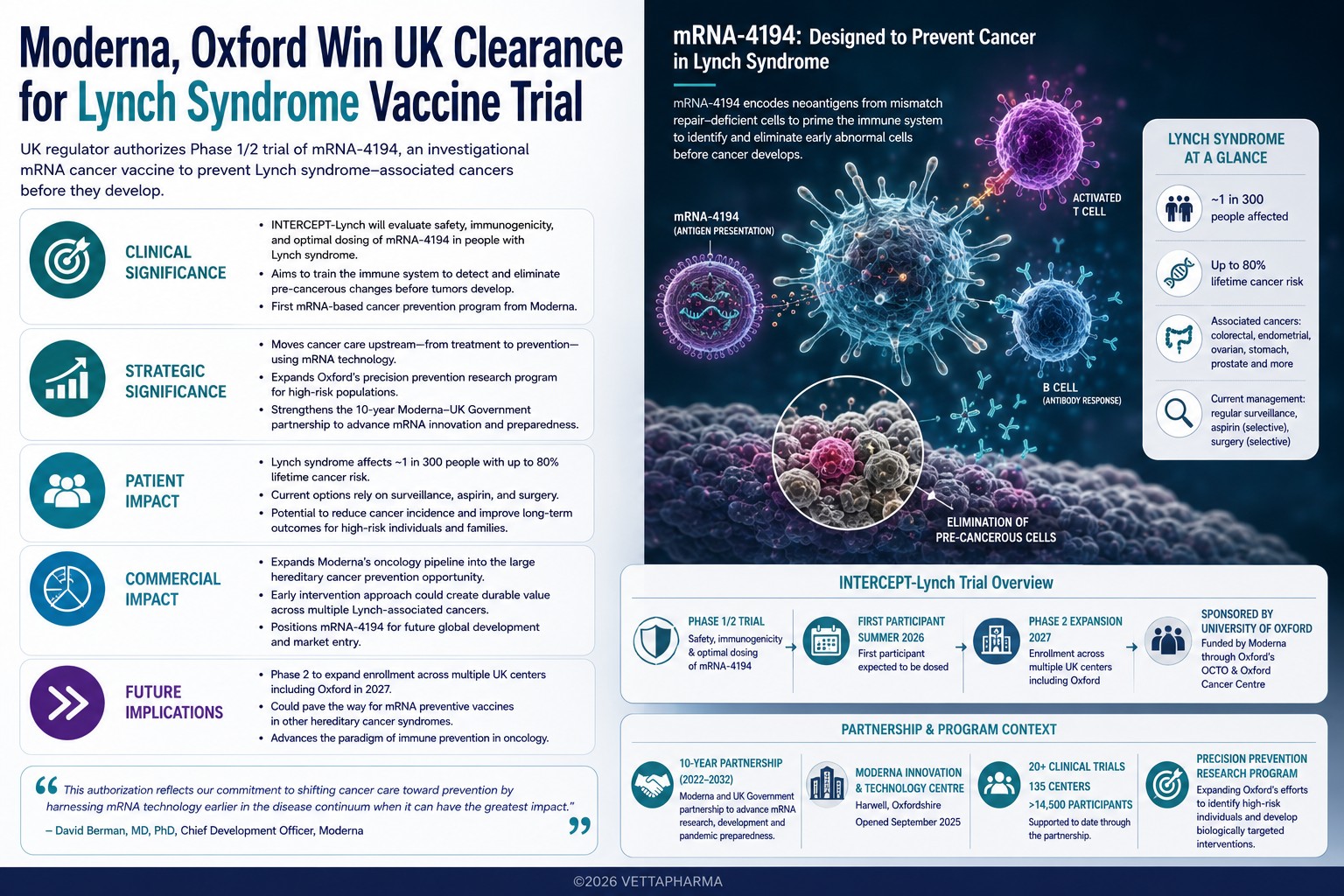
By VETTAPHARMA reporter – Derek Roche: Moderna and University of Oxford have received authorization from the UK’s Medicines and Healthcare products Regulatory Agency to initiate a Phase 1/2 clinical trial evaluating mRNA-4194, an investigational mRNA-based cancer vaccine designed for people with Lynch syndrome.
The study, known as INTERCEPT-Lynch, marks Moderna’s first cancer prevention program and aims to assess whether mRNA technology can train the immune system to recognize and target early cancer-related changes before malignancies develop. The authorization represents a significant step in exploring cancer prevention strategies using mRNA platforms rather than treating established disease.
Lynch syndrome is the most common hereditary cancer predisposition condition, affecting approximately 1 in 300 people and conferring a lifetime cancer risk of up to 80%. The inherited disorder results from alterations in DNA mismatch repair genes, increasing the risk of several malignancies, including colorectal, endometrial, ovarian, stomach, and prostate cancers. Current management options largely rely on regular surveillance, with low-dose aspirin and surgery used selectively.
The Phase 1/2 trial will evaluate the safety, immunogenicity, and optimal dosing of mRNA-4194 in individuals with Lynch syndrome. The study is funded by Moderna, sponsored by the University of Oxford, and conducted through the University’s Oncology Clinical Trials Office and Oxford Cancer Centre.
According to the companies, the first participant is expected to be dosed during summer 2026. A second study phase is planned to expand enrollment across multiple UK centers, including Oxford, with initiation anticipated in 2027.
Moderna Chief Development Officer David Berman, MD, PhD, said the authorization reflects efforts to move cancer care toward prevention by applying mRNA technology earlier in the disease continuum when immune intervention may have the greatest impact.
Professor David Church, the trial’s lead investigator and a Cancer Research UK Senior Cancer Research Fellow at Oxford, noted that people with Lynch syndrome often face a substantially elevated risk of developing cancer at younger ages. He said the study seeks to determine whether mRNA vaccination can help the immune system recognize and respond to pre-cancerous changes before tumors emerge.
The program also forms part of the broader 10-year strategic partnership established in 2022 between Moderna and the UK Government to strengthen domestic mRNA research, development, and pandemic preparedness capabilities. The collaboration includes the Moderna Innovation and Technology Centre in Harwell, Oxfordshire, which opened in September 2025, and has supported more than 20 clinical trials across 135 centers involving over 14,500 participants.
The INTERCEPT-Lynch study further expands Oxford University’s precision prevention research program, which focuses on identifying high-risk populations and testing biologically targeted interventions aimed at delaying or preventing cancer development.
Quick FAQs
1. What Is mRNA-4194?
mRNA-4194 is an investigational mRNA-based cancer vaccine being developed by Moderna to stimulate immune responses against targets associated with early cancer development in people with Lynch syndrome.
2. What Happened?
The UK MHRA authorized the Phase 1/2 INTERCEPT-Lynch clinical trial, allowing Moderna and the University of Oxford to begin evaluating mRNA-4194 in people with Lynch syndrome.
3. What Is the INTERCEPT-Lynch Trial?
INTERCEPT-Lynch is a Phase 1/2 study designed to assess the safety, immune response, and optimal dose of mRNA-4194 in individuals with Lynch syndrome. The first participant is expected to be dosed in summer 2026, with broader UK enrollment planned for 2027.
4. What Is Lynch Syndrome?
Lynch syndrome is an inherited genetic condition caused by defects in DNA repair genes. It affects about 1 in 300 people and substantially increases the risk of several cancers, including colorectal, endometrial, ovarian, stomach, and prostate cancers.
5. What Are the Key Details of the Study?
The trial will evaluate safety, characterize immune responses generated by mRNA-4194, and identify an appropriate dose for future development. The study is funded by Moderna and sponsored by the University of Oxford.
6. Why Is This Important?
The program represents Moderna’s first cancer prevention initiative and explores whether mRNA technology can prevent cancer before it develops in a genetically high-risk population. If successful, it could expand the role of mRNA medicines beyond treatment and vaccination against infectious diseases.

