
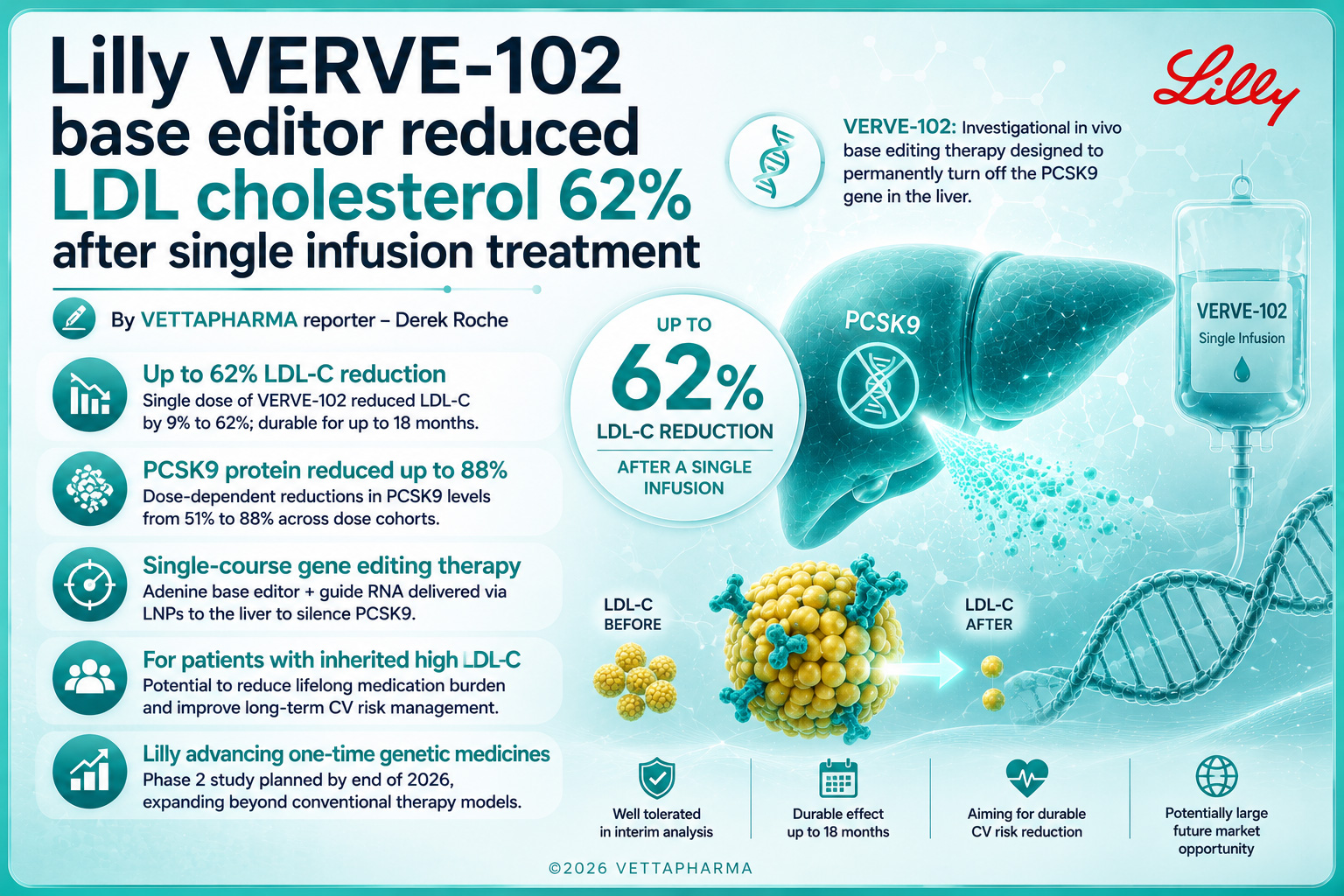
By VETTAPHARMA reporter – Derek Roche: Eli Lilly and Company reported positive interim Phase 1b data for VERVE-102, an investigational in vivo base editing medicine designed to permanently turn off the PCSK9 gene in the liver following a single infusion.
Results from the ongoing Heart-2 Phase 1b trial evaluating adults with heterozygous familial hypercholesterolemia (HeFH) or premature coronary artery disease demonstrated dose-dependent reductions in both circulating PCSK9 protein and low-density lipoprotein cholesterol (LDL-C).
In the interim analysis involving 35 participants across six dose cohorts, a single dose of VERVE-102 reduced PCSK9 levels by 51% to 88% and achieved corresponding LDL-C reductions ranging from 9% to 62%, with the highest reductions observed at the 1.0 mg/kg dose level. The reductions remained durable for up to 18 months following treatment.
VERVE-102 is designed as a single-course gene editing therapy, using an adenine base editor and guide RNA delivered through a lipid nanoparticle platform targeting the liver. The programme aims to mimic naturally occurring PCSK9 loss-of-function variants associated with substantially lower lifetime cardiovascular risk.
The Heart-2 trial is evaluating the safety, tolerability, and pharmacodynamic effects of VERVE-102 in patients requiring additional LDL-C lowering despite maximally tolerated oral lipid-lowering therapy. Lilly plans to initiate a Phase 2 clinical study by the end of 2026.
The programme reflects Lilly’s strategy of expanding into one-time genetic medicines for chronic cardiovascular diseases, moving beyond conventional long-term therapy models toward potentially durable single-treatment approaches.
For patients with inherited or difficult-to-control hypercholesterolemia, a one-time treatment capable of producing sustained LDL-C reduction could reduce dependence on chronic lipid-lowering medications and improve long-term cardiovascular risk management.
From a commercial perspective, durable gene editing approaches targeting cardiovascular disease represent a potentially significant future market opportunity, particularly as existing PCSK9 inhibitors and cholesterol-lowering therapies continue to demonstrate strong commercial demand globally.

